
A "catalog look" comes from furniture and finishes chosen off a showroom floor, sized for a generic room rather than yours. Custom interior design starts from your home's actual dimensions, then builds cabinetry, ceiling details, and furniture around them. The result is a space that fits your life instead of a display model. At Impeccable by Meredith Park, we start every project by observing how a family actually uses its space, so the final design reflects real daily habits rather than a generic layout.
Key Takeaways
A catalog look comes from generic sizing, not from any single style choice.
Custom furniture and cabinetry are built to your home's exact measurements, unlike showroom pieces.
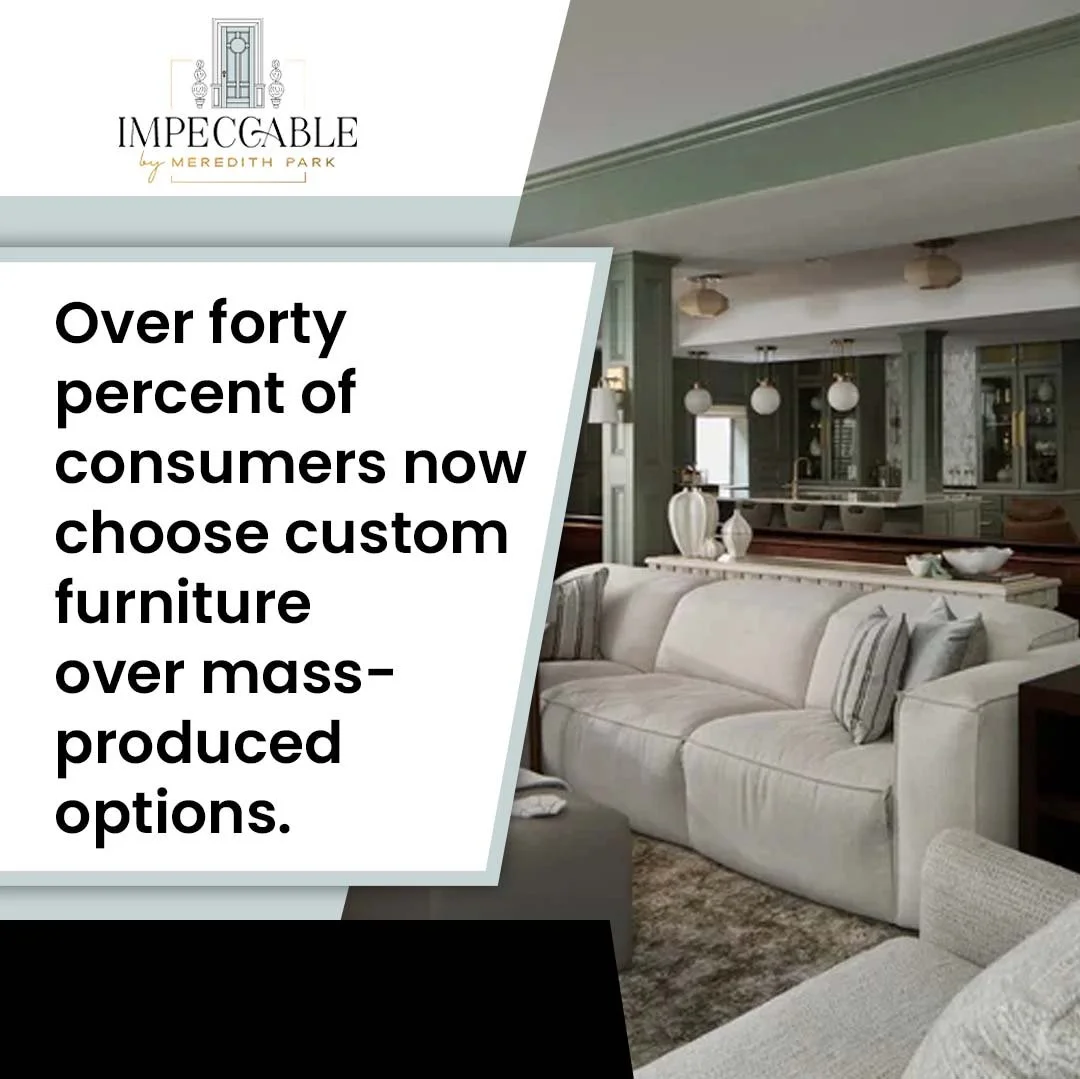
42% of consumers now prioritize custom furniture over mass-produced options, per industry research.
Architectural details like ceilings and millwork set a room apart from a catalog collection.
Solid materials in custom work can be refinished, extending value well beyond typical retail furniture.
What Actually Creates a "Catalog Look" in a Home?
A catalog look happens when a room is filled with matched, mass-produced sets rather than pieces chosen for that specific space. Big-box and online retailers sell furniture built to one standard size, in a handful of finishes, for the widest possible market. When several rooms use the same collection, the home starts to resemble a showroom instead of a personal space. Proportions rarely match ceiling height, wall length, or how a family actually moves through a room.
How Is Custom Interior Design Different From Buying Off the Shelf?
Custom interior design is built around your home's exact measurements, not a factory template. A residential interior design service works with cabinetmakers, upholsterers, and finish specialists to build pieces for the room in front of them. Custom interior architectural details, such as coffered ceilings, arched openings, or built-in banquettes, cannot be purchased from a catalog because they are made for one address only. Bespoke furniture design follows the same logic. A sofa scaled to a specific bay window fits in a way no standard model can.
Do Homeowners Actually Prefer Custom Over Mass-Produced Pieces?
Yes, a growing share of homeowners now choose custom over mass-produced furniture. According to industry research, 42% of furniture buyers prefer companies that let them personalize their purchases, largely because ready-made pieces fail to fit irregular rooms or reflect personal style. That shift reflects a broader move toward high-end interior design built around a specific home, not a general audience.
Catalog Furniture vs. Custom Design: A Side-by-Side Look
| Factor | Catalog Look | Custom Interior Design |
|---|---|---|
| Fit to Room | Standard sizing | Built to exact dimensions |
| Uniqueness | Same pieces in many homes | One-of-a-kind for your space |
| Materials | Often engineered wood, laminate | Solid wood, natural stone, premium textiles |
| Architectural Details | Limited, add-on trim | Ceiling treatments and millwork built in |
| Style Longevity | Tied to current trends | Timeless proportions, intentional home design |
| Long-Term Value | Depreciates quickly | Can be refinished, holds value |
How Do You Move a Room Away From a Catalog Look?
Start with architectural details specific to the room, then layer in furniture built for those proportions. Residential interior designers typically begin with ceiling treatments, millwork, or built-ins before selecting furnishings, since those elements set the scale for everything else. Adding vintage or antique pieces alongside new custom work also breaks up the uniformity that defines a catalog look. You can see this approach applied across projects in our full portfolio, where custom cabinetry and sourced pieces share the same room.
Managing every stage in-house, from design through installation, keeps these decisions aligned so the finished room reflects one vision instead of a mix of trends.

Ready to Move Beyond the Catalog Look?
At Impeccable by Meredith Park, we bring high-end interior design to every project, starting with architectural details and finishing with furniture and vintage pieces built for your space, not a showroom floor. If you are ready to start planning a room that reflects your home instead of a catalog, we would love to hear from you.
Call us at (773) 551-5944 or email impeccableoffice@gmail.com to start the conversation.
